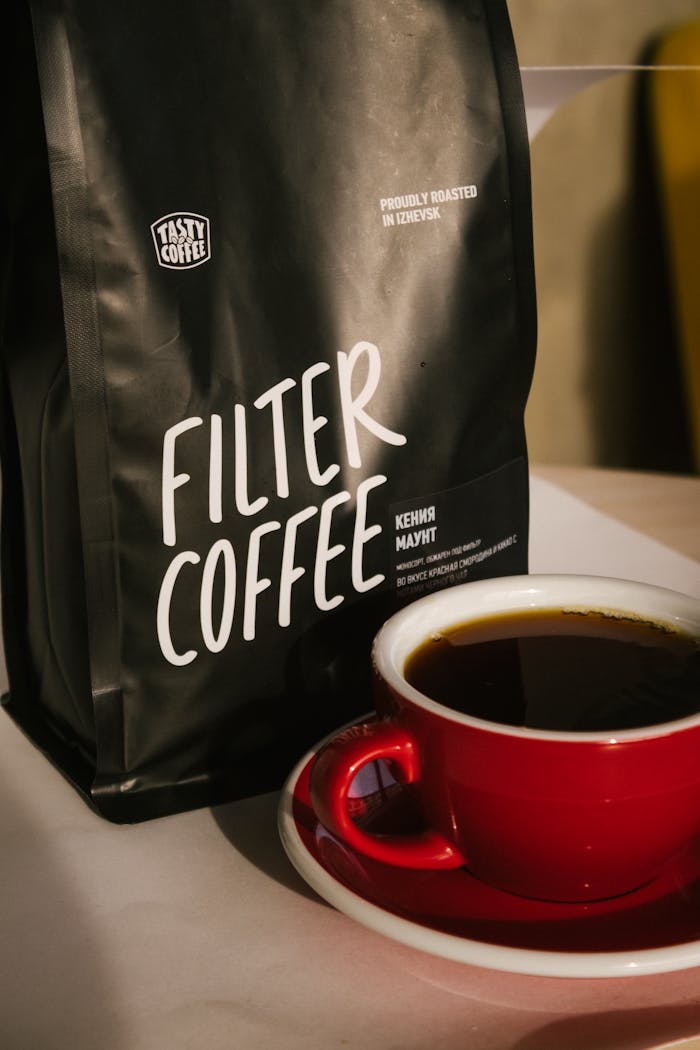

Most people who drink coffee every day have never thought much about the distance their cup has travelled — not just in miles, but in hands, decisions, and transformations. A premium coffee blend is not a product so much as a journey: a sequence of interconnected choices made by farmers, processors, exporters, roasters, and baristas, each one capable of elevating or undermining everything that came before. Understanding that journey changes the way you drink coffee. It makes every cup an act of attention.
It begins at altitude. The finest coffee is grown between the Tropics of Cancer and Capricorn, in a band known as the Coffee Belt, at elevations typically ranging from 1,000 to 2,200 metres above sea level. High altitude slows the development of the coffee cherry, allowing it to accumulate sugars and develop the complex organic acids that create flavour. Farmers who grow at these elevations face harder conditions — cooler temperatures, more difficult terrain — but the cup quality reward is significant.
The coffee plant itself requires extraordinary attention. It takes three to four years from planting to first harvest, and each tree produces only enough cherries annually to make roughly one pound of roasted coffee. The cherries must be picked at precise ripeness — too early and the cup will be underdeveloped and harsh; too late and fermentation will have begun in the fruit, introducing unwanted flavours. On the finest estates, this means handpicking individual cherries rather than stripping entire branches, a process of immense labour and skill.
After harvesting, the processing method determines much of the coffee’s fundamental character. In washed processing, the fruit is removed immediately and the beans are fermented briefly in water before being dried on raised beds. This produces the clean, bright, clearly defined flavours associated with Ethiopian and Kenyan coffees. Natural processing leaves the fruit on the bean throughout drying, creating the intense fruit and chocolate notes typical of great Brazilian and Ethiopian naturals. Honey processing sits between these two poles, removing most but not all of the fruit before drying, creating sweetness and complexity with a smoother acidity.
The dried beans — still called “green coffee” at this stage — are then milled to remove their parchment layer, graded by size and density, sorted for defects by machine and by hand, and prepared for export. A premium blend’s components may pass through the hands of specialist importers who maintain direct relationships with producing farms and can vouch for the provenance and quality of specific lots. These relationships are the supply chain equivalent of fine wine negociants: trusted intermediaries who add genuine value.
At the roastery, green beans arrive and the roaster’s work begins. This is where chemistry and intuition meet. A coffee roaster applies carefully calibrated heat over a period of typically ten to fifteen minutes, driving off moisture, causing the Maillard reaction to develop hundreds of new flavour compounds, and eventually triggering what roasters call “first crack” — an audible pop as the bean’s structure expands and its sugars begin to caramelise. Where the roaster ends this process determines the roast level; a matter of seconds can be the difference between a luminous, fruit-forward light roast and a rich, chocolatey medium.
For a blend, this process is multiplied. Each component origin is assessed on its own merits and roasted to the profile that brings out its best characteristics before the components are combined in proportions the roaster has developed through extensive cupping and refinement.
Finally, the blended and rested coffee reaches the barista or the home brewer. Even here, the journey is not complete. Grind size, water temperature, extraction time, milk texture — every variable in the brewing process either honours or wastes the work of everyone who came before.
A premium coffee blend, seen whole, is a collaborative work of extraordinary complexity. Every cup is a small miracle of coordinated human effort and natural process. It deserves to be treated as one.