
Of all the variables that shape what ends up in your espresso cup, roast level is simultaneously the most dramatic and the most frequently misunderstood. It is dramatic because the roasting process transforms green coffee — grassy, dense, and essentially undrinkable — into the aromatic, complex, deeply pleasurable product we know, through a cascade of chemical reactions that produces hundreds of new flavour compounds. It is misunderstood because most coffee drinkers believe that dark roast means strong coffee and light roast means weak coffee, when in fact the relationship between roast and flavour is considerably more interesting than that.
Green coffee beans contain water, sugars, amino acids, chlorogenic acids, lipids, and a range of other compounds that collectively create the raw material for flavour. Before roasting, these compounds exist in their original form — the coffee has potential but no palate appeal. Heat applied in a roasting drum begins to change everything. As temperature rises through the first ten minutes of a typical roast, moisture is driven off, the bean turns from green to yellow to a progressively deepening brown, and the Maillard reaction — the same reaction responsible for the crust on baked bread and the sear on a steak — begins generating hundreds of new aromatic compounds that did not exist in the raw bean.
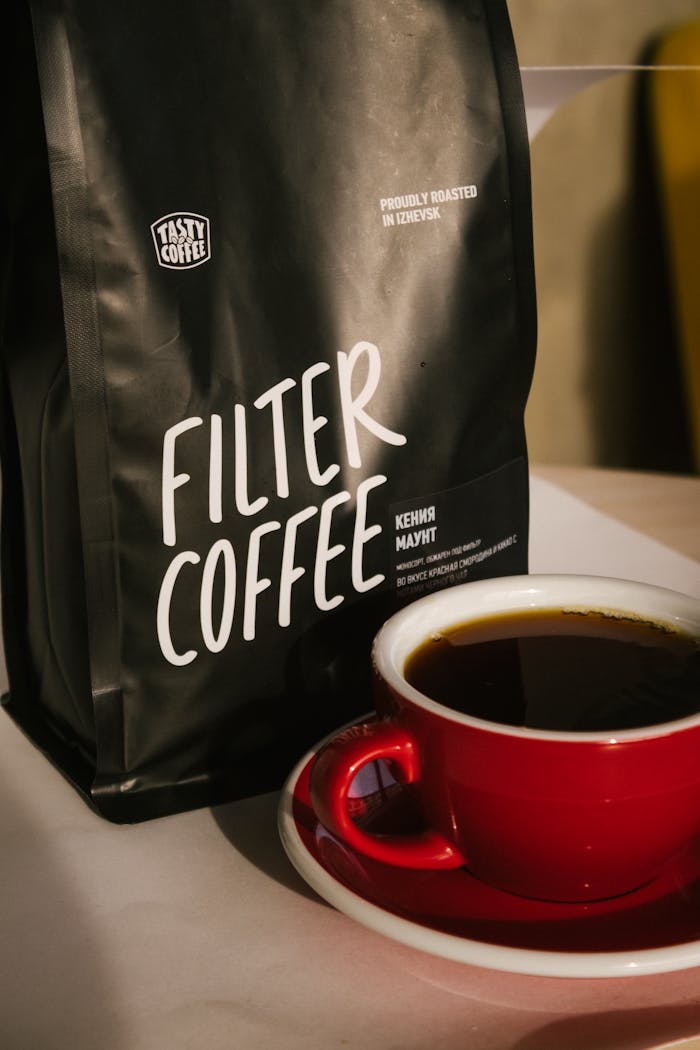
At around 196 degrees Celsius, “first crack” occurs: an audible popping as the bean’s expanding gases rupture its cellular structure. This moment marks the beginning of the light roast territory. Coffees stopped here are described as light or filter roasts. They retain the highest concentration of compounds derived from the bean’s origin — the fruity organic acids, floral aromatics, and delicate sugars that reflect the specific geography, variety, and processing method of the green coffee. Light roasts are the roast level of transparency: what you taste is primarily what the coffee is, rather than what the roasting process has made it. They tend to be brighter, more acidic, more complex in a fruit-forward way, and considerably more variable — because they have less roasting character to hide behind.
As roasting continues past first crack into the medium roast range, a series of important transitions occur. The sugars that provided fruit brightness begin to caramelise, creating the sweet, rounded, toffee-like notes that characterise well-executed medium roasts. Acidity softens as the organic acids break down under sustained heat. Body increases as cell walls break down further. The flavour profile of a medium roast represents a negotiation between origin character and roast character — both are present and ideally complementary. This is the roast level most accessible to the widest range of palates and the most forgiving to brew, which explains its dominance in the specialty coffee market.
Dark roasting pushes further still, towards and sometimes past “second crack” — a second audible cracking as the bean’s structure continues to break down. At this stage, the delicate origin compounds that define a coffee’s unique character are largely destroyed by heat, replaced by the bold, assertive flavours of the roasting process itself: dark chocolate, tobacco, smoke, carbon, ash, and a pronounced bitterness as chlorogenic acids degrade and bitter compounds multiply. The oils that caramelise inside the bean begin to migrate to its surface, giving dark-roasted beans their characteristic sheen. Body is heavy but acidity is minimal. A great dark roast, from quality raw material and applied with restraint and precision, can be genuinely magnificent — rich, complex in its roasty way, satisfying in an almost primal sense. A poor dark roast, from mediocre beans roasted past the point where any origin character survives, is simply bitter and harsh.
For espresso specifically, roast level interacts with the brewing process in important ways. The high pressure and concentration of espresso extraction amplifies acidity, which is why very light roasts can taste uncomfortably sharp as espresso even when they shine as filter coffee. Many roasters develop espresso-specific roast profiles that are slightly darker than their filter versions of the same bean, balancing brightness with the body and sweetness that espresso benefits from.
The choice between light, medium, and dark is ultimately an aesthetic one — a statement about what you value in a cup. There is no objectively correct answer. There is only the roast that produces the experience you find most satisfying, which is the beginning of a very pleasurable exploration.